Visual routines for the classroom
Short answer
How teachers use Tandli
- Consistent visual routines for classroom transitions
- First-then structure for self-regulation
- Life-skills and independence goals (IEP-aligned)
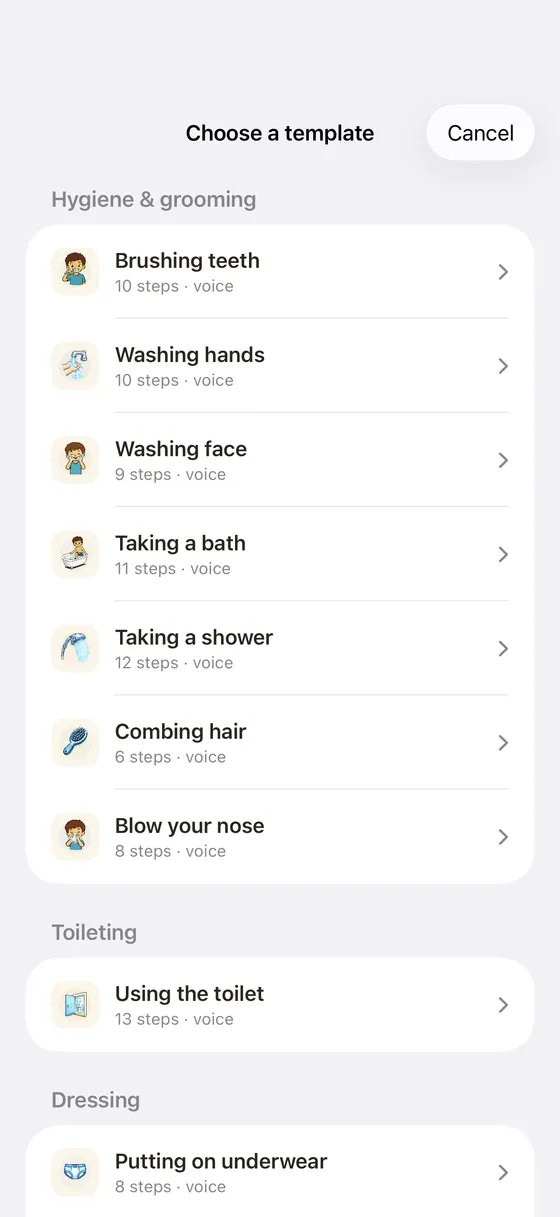
- Task-analysed activities you can adapt per student
- A calm, low-sensory interface for the sensory-sensitive
- Routines that carry over between school and home
Structure that reduces friction
Predictability is regulation. Presenting one step at a time — with a picture, a short prompt, and a clear “what’s next” — reduces the cognitive load of transitions and helps students act independently rather than waiting for a prompt. Learn more in our guide to first-then boards and visual schedules for autism.
Consistency between school and home
When a routine looks and sounds the same everywhere, students generalise skills faster. Share the approach with families — a parent can record the same steps in their voice at home. See Tandli for parents.
Frequently asked questions
Can Tandli be used in a special-education classroom?
Yes. Tandli’s visual schedules and first-then structure suit self-contained and inclusion settings, and the low-sensory design helps sensory-sensitive students stay regulated.
Does it support IEP goals?
Tandli is well-suited to independence, self-help, and daily-living-skills goals. It’s an educational support tool, not a clinical or assessment instrument.
Can routines follow a student home?
Because a parent can record steps in their own voice, the same routine structure can be mirrored at home for consistency between settings.
Bringing Tandli to your classroom?
Download Tandli free on the App Store — and if you’re using it in a classroom, email us; we’re planning classroom options and would love your input.
Free download · 14-day free trial · iPhone, iOS 26 or later